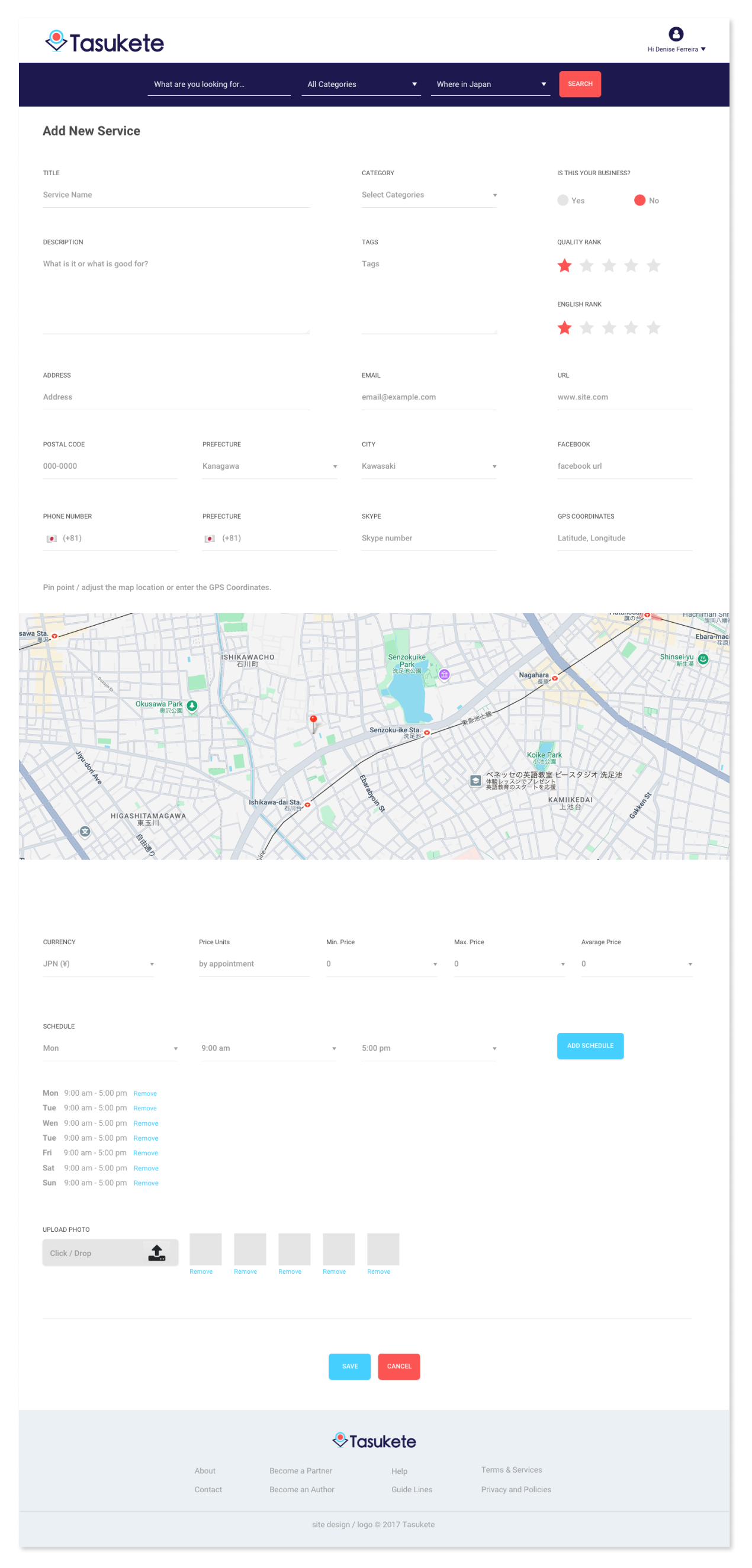
A community platform designed to help foreigners navigate daily life in Japan, combining a service directory, geolocation, and social feed in one place.
01: THE PROBLEM
Many foreigners in Japan face compounding challenges: services aren't available in their language, information is fragmented across dozens of sources, and the social cost of asking for help is high. The result is isolation, not just from society, but from basic services.
No single source for multilingual services. Foreigners piece together information from forums, Facebook groups, and word of mouth, unreliable and exhausting.
Existing services lacked ratings or language proficiency indicators, making it impossible to know which providers could actually help.
Without a community of people in the same situation, newcomers had no one to ask. The knowledge existed; it just wasn't connected.
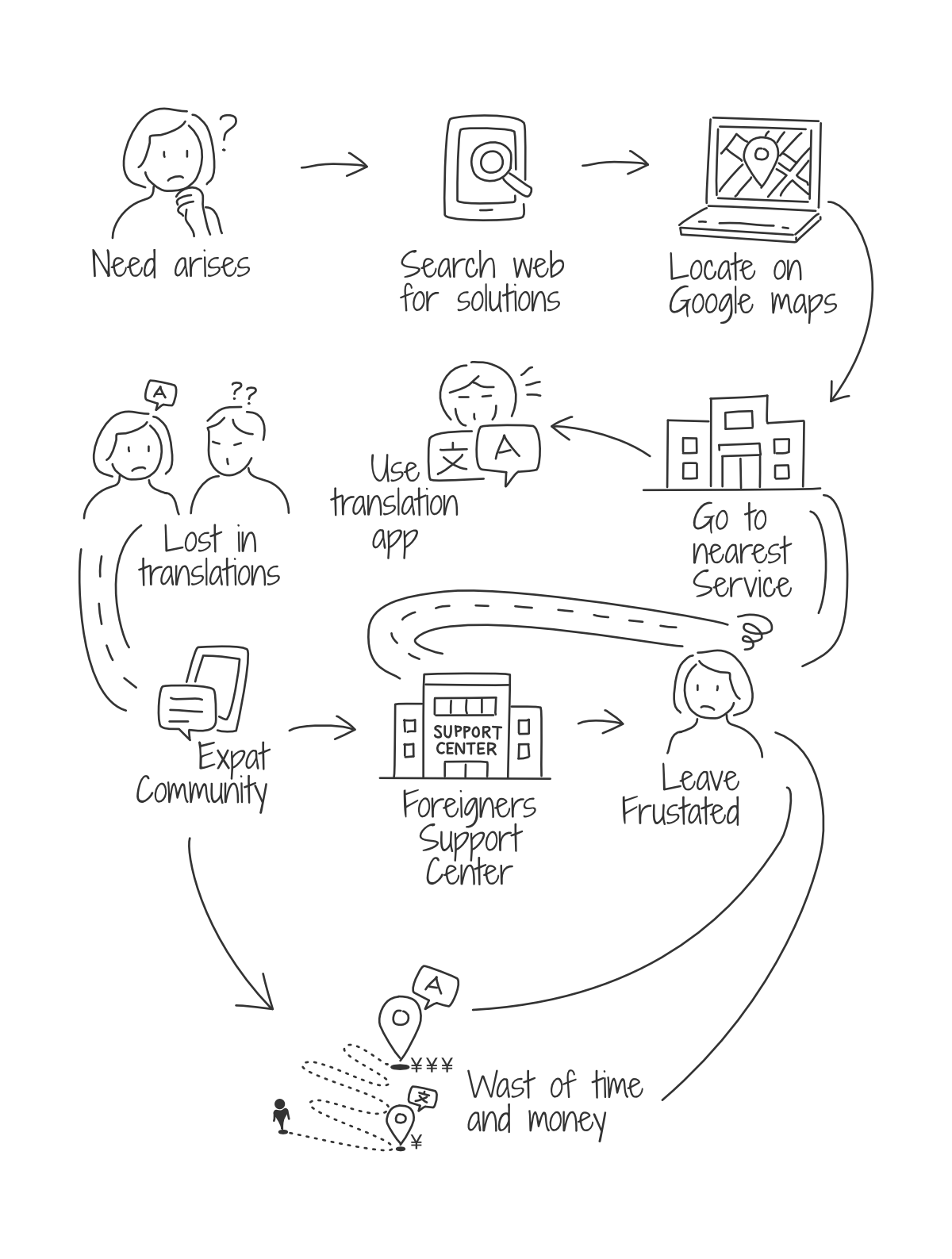
Journey map: The Search for Solutions. A Foreigner's Service Journey
02: RESEARCH

Research mapped the actual experience of finding services as a foreigner in Japan, from initial search, through failed attempts, to established workarounds. Interviews revealed consistent patterns of friction and social dependency.
User interviews
Sessions with foreign residents in Japan across multiple nationalities, focused on service discovery, daily friction, and community reliance.
Journey mapping
Mapped 'The Search for Solutions: A Foreigner's Service Journey' to identify critical friction points and emotional lows.
Platform audit
Competitive review of expat platforms, service directories, and community apps, identifying feature gaps and trust signals.
03: THE SOLUTION
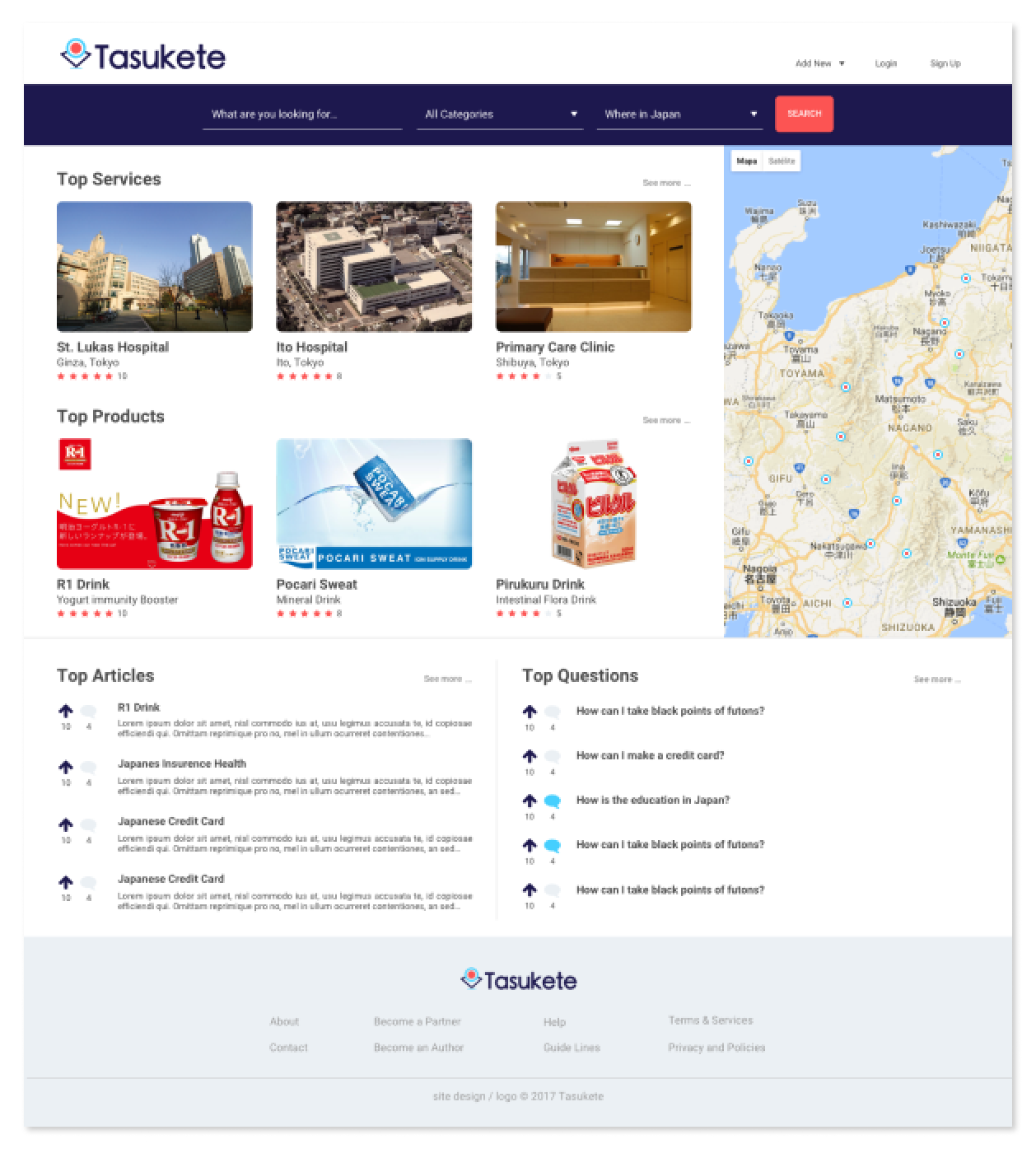
Tasukete combines three layers that expats already use separately, a service directory, a community feed, and geolocation, into a single coherent platform designed for daily use.
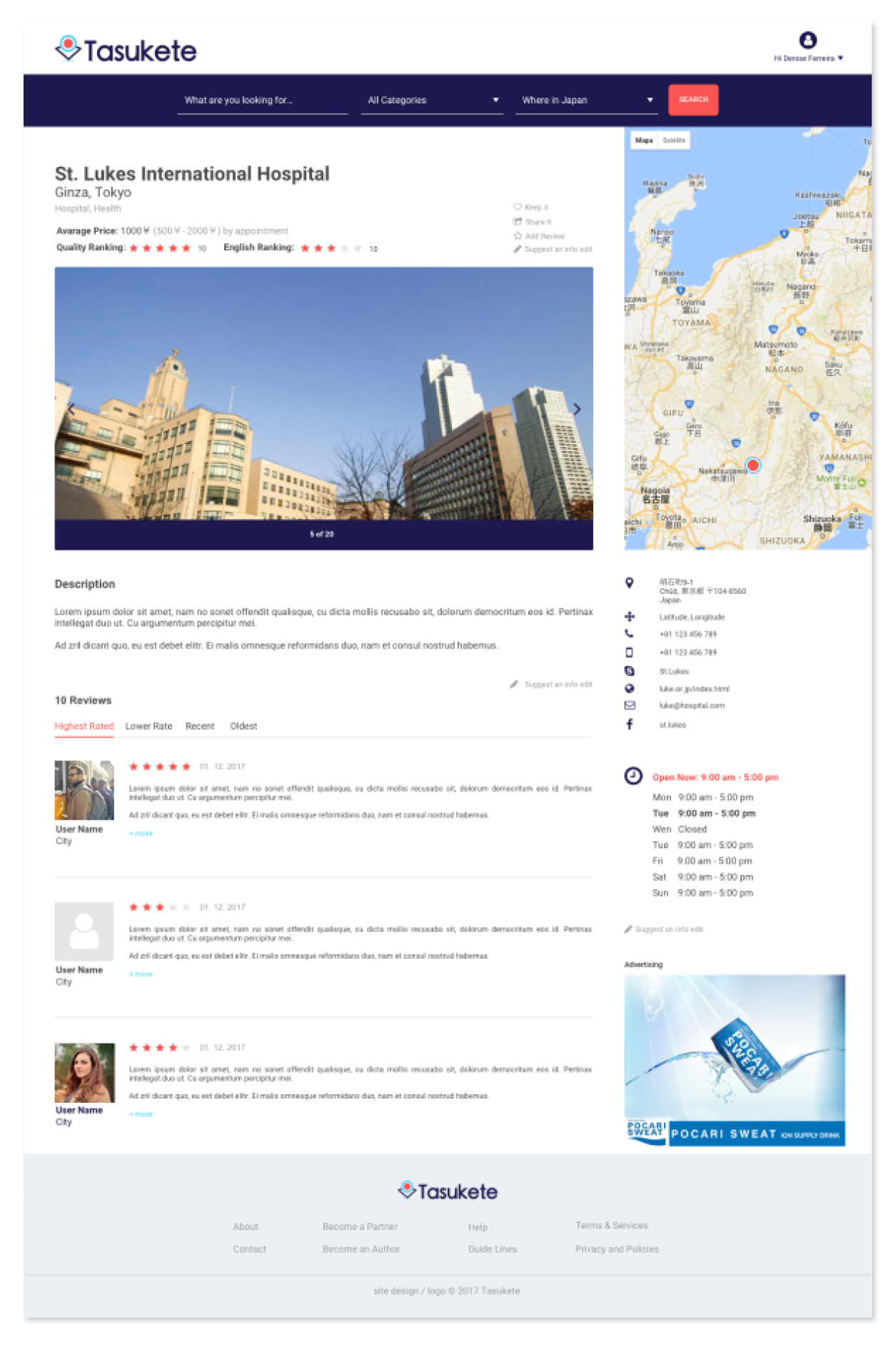
Organised by type, location, and language accessibility, users quickly find services categorised around real needs.
Shows relevant services nearby in real time, making discovery efficient and tailored to the user's current location.
Users post questions, share experiences, and review services, creating a self-sustaining, collaborative knowledge base.
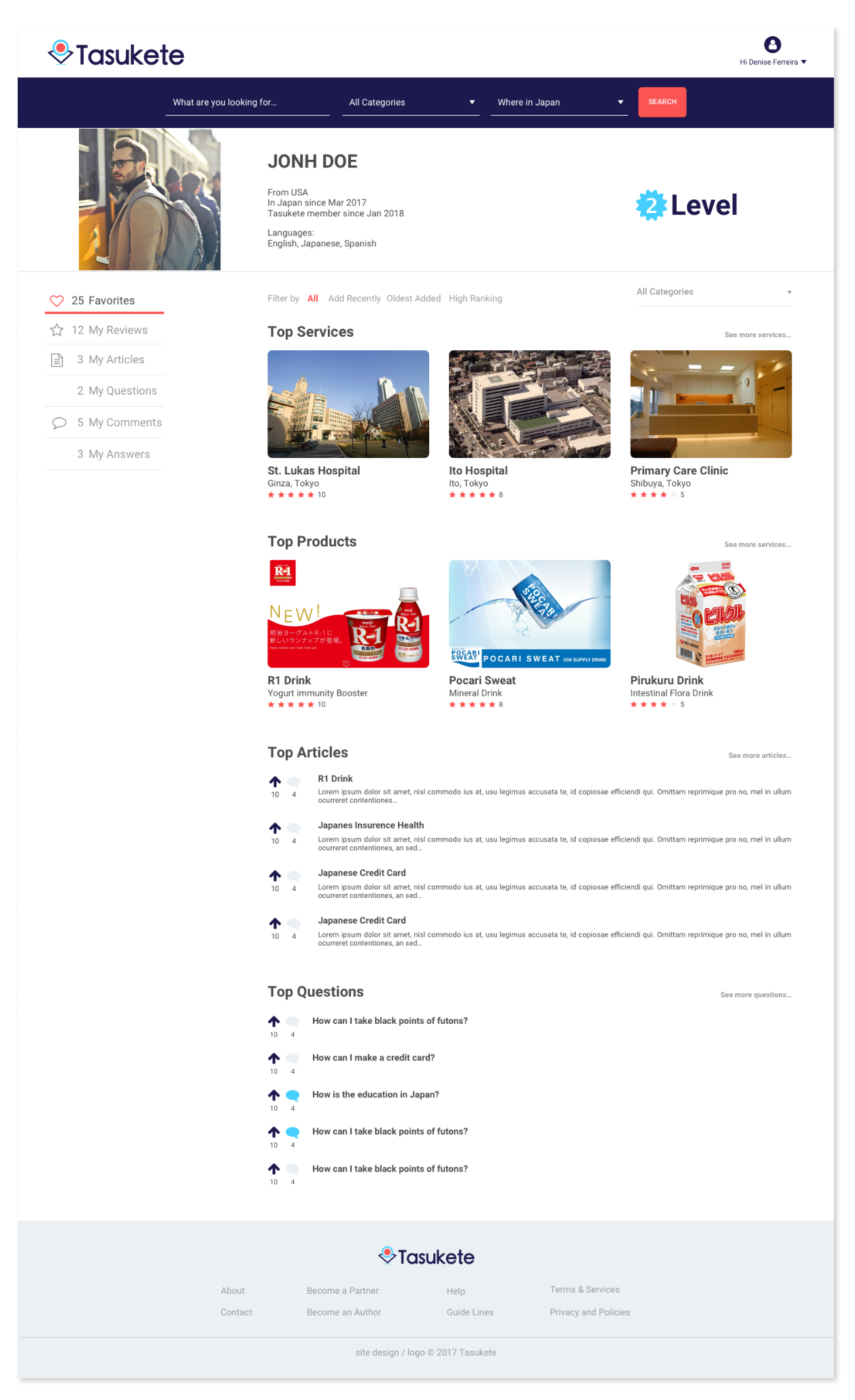
Reputation scores reward contributions, reviews, answers, and shared insights. Drives participation and recognition.
Transparency layer ensuring users make informed decisions based on service quality and language proficiency ratings.
04: OUTCOMES
A functional MVP was tested in private beta with expatriates in Japan. The platform's value and usability were validated through real usage, demonstrating strong potential even before organic growth.
05: REFLECTION
Building for a diaspora community taught me that the hardest UX problem isn't navigation. It's trust. Users won't engage until the platform feels like it belongs to people like them.
The gamification and review systems weren't extras; they were the foundation. Without earned trust, no feature would drive meaningful contribution.
Making Tasukete self-sustaining required designing incentive structures, not just interfaces. The hardest design problem was economic, not visual.
The visual identity needed to feel warm and accessible without being naive about the real friction foreigners face daily.
After MVP, the biggest open questions were about community moderation and content quality, UX challenges that live at the intersection of product and policy.