Product Design GIS · Mapping Sattelite data

When data lives
in layers, risk lives
in the dark

A visual tool redesigned to surface pipe age, diameter, and risk directly on infrastructure maps, eliminating layer switching for water utility engineers.

MY ROLE Product Design Lead
TYPE In-house Project
SCOPE Research · Strategy · UX/UI Design
PLATFORM Cloud-based Mapping

01: THE CHALLENGE

Infrastructure data buried in layers

Municipalities managing aging water infrastructure faced a critical gap: risk maps showed where pipes were, but not why they were at risk. Maintenance decisions relied on manual layer toggling, slow, error-prone, and invisible to field teams.
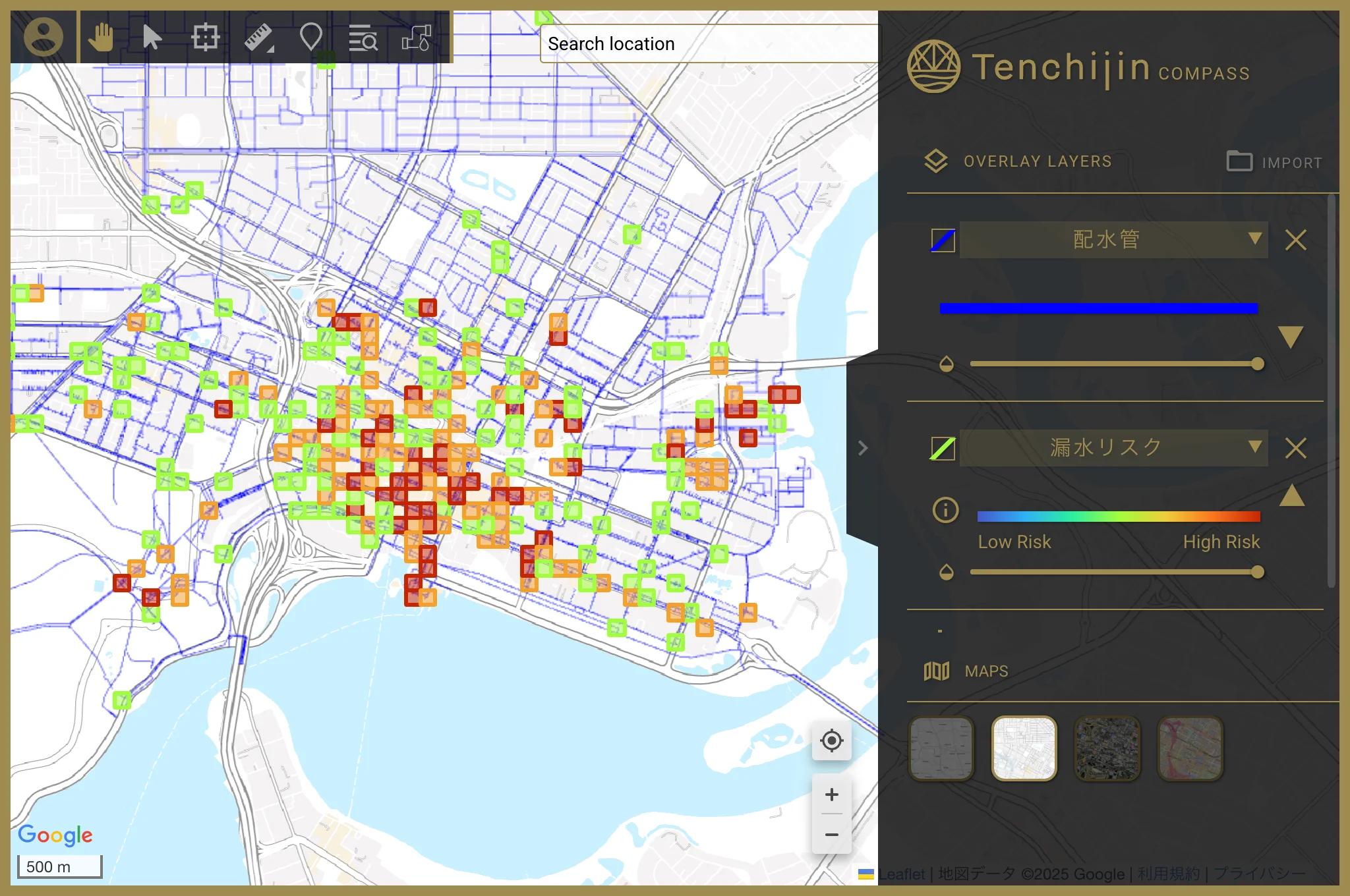
Before redesign
P.01

Layer overload

Separate attribute layers caused visual clutter and overlapping data. Engineers toggled between views rather than seeing the full picture at once.

P.02

No contextual risk signal

Risk maps lacked pipe installation year and diameter, the two attributes that most directly explain why a section is flagged as high-risk.

P.03

Reactive maintenance

Without clear multi-attribute context, inspection decisions were driven by complaints rather than proactive, data-informed prioritisation.
02: RESEARCH

Listening to engineers in the field

Contextual interviews with municipal engineers, infrastructure managers, and field teams revealed three consistent needs: contextual awareness of pipe conditions, quick visual interpretation, and clear prioritisation of risk hotspots.

01

Contextual interviews

Sessions with municipal engineers and infrastructure managers, focused on map usage, decision-making workflows, and inspection triggers.

02

Field observation

Observed inspection workflows and live map usage to capture real behaviour rather than self-reported patterns.

03

Competitive audit

Reviewed existing GIS and infrastructure management platforms to identify best practices in attribute visualisation.

03: THE SOLUTION

One map. Two attributes. Zero layer switching.

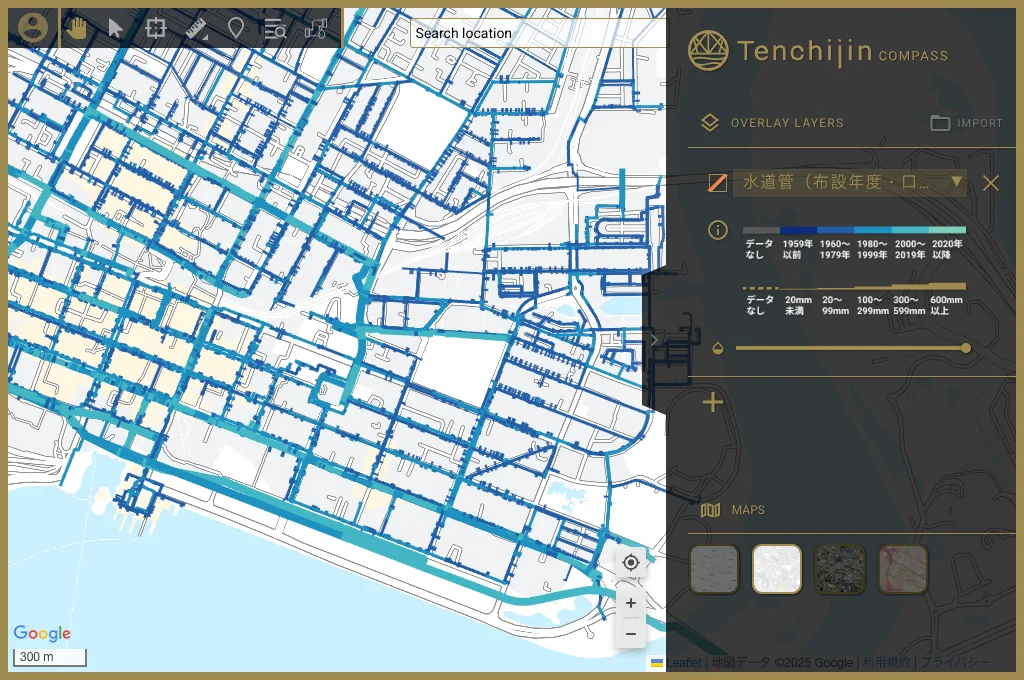
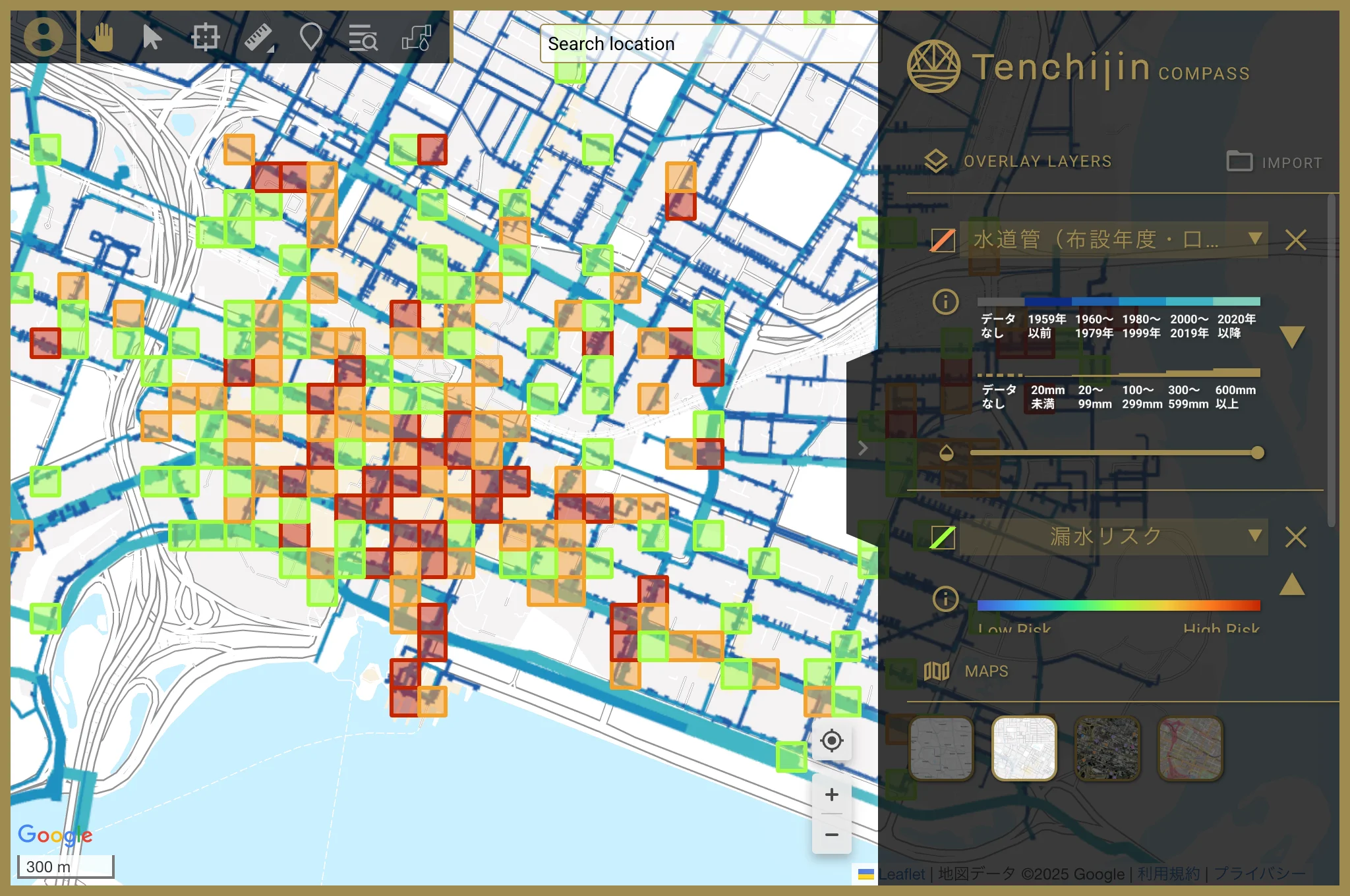
The redesigned feature integrates pipe installation year and diameter directly into the risk assessment map using two simultaneous visual encodings, colour and line thickness, that engineers can read at a glance.

Pipe age colour encoding Pipe diameter thickness encoding

Colour encoding

Five-tone blue scale for pipe age. Darker means older, lighter means newer. Grey tones and dashed lines indicate missing data.

Thickness encoding

Varying line weights for pipe diameter. Thicker lines represent larger pipes. Combines with colour to enable simultaneous multi-attribute reading.

Zoom-responsive display

Visualisation adapts at different zoom levels, maintaining readability and detail whether reviewing a city-wide overview or a single street.

Scalable architecture

Modular design accommodates future attribute additions without compromising clarity or usability as the platform evolves.

04: OUTCOMES

Faster decisions.
Fewer unnecessary inspections.

The feature transformed how water utility engineers assess pipeline risk, eliminating layer switching and improving situational awareness for the entire maintenance team.

Faster risk assessment
0 Layer switches needed
2 Attributes simultaneous view
Unnecessary fieldwork costs

05: REFLECTION

Insights

Designing for specialists means respecting the mental models they've built over years. The solution succeeded not by replacing their workflow, but by encoding the information they already needed into the layer they already trusted.

Constraints reveal the real problem

The limit of one map layer forced a more elegant encoding solution than multiple layers would have. What felt like a constraint became the design principle.

Data has grammar

Colour and thickness each carry meaning. Mixing them requires careful hierarchy to avoid visual noise, the legend isn't optional, it's structural.

Trust the domain expert

The most valuable insights came from watching engineers interact with maps, not from asking them what they wanted.

Scalability is a design decision

Every encoding choice was evaluated for what it would mean when a third or fourth attribute needed to be added, future-proofing built in from the start.

NEXT CASE STUDY

Explore more work

View all projects →